
Memory attack protection
Monitors underlying runtime behavior associated with memory threats such as ROP-style abuse and puppet-process activity.
AIDR
AI Detection and Response (AIDR) is Ansen's detection-and-response product for memory-level threats, fileless attacks, exploit behavior, and in-memory intrusion paths that conventional perimeter controls often miss.
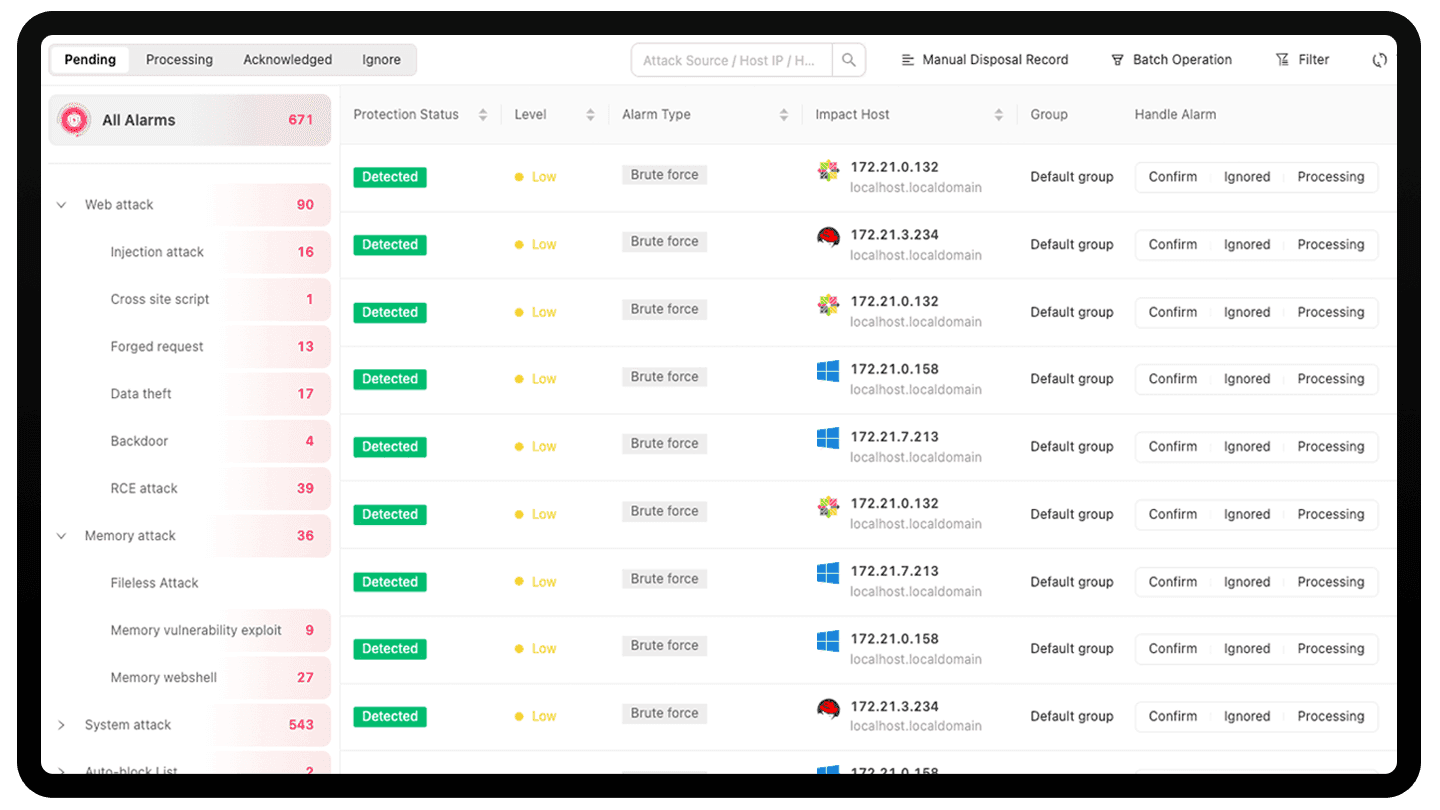
Legacy source material describes a unique memory-probe approach. The public page reframes it as runtime control: observe memory behavior, identify exploit patterns, and contain intrusion before it becomes business interruption.
Monitors underlying runtime behavior associated with memory threats such as ROP-style abuse and puppet-process activity.
Detects intrusion paths that use legitimate tools, stealth behavior, or script execution rather than relying on dropped malicious files.
Provides protection direction for unknown-vulnerability exploitation when patch state cannot be the only line of defense.
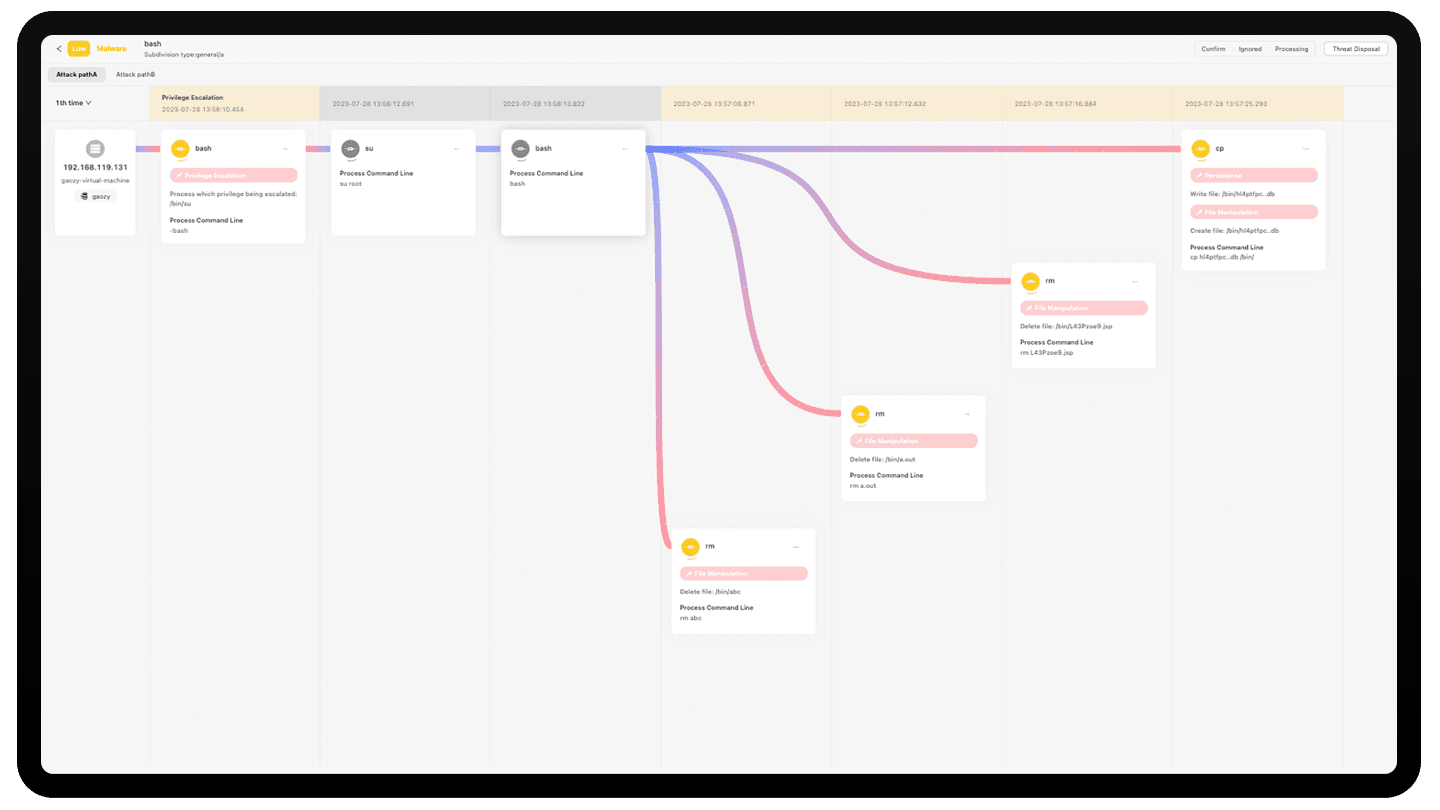
The source material emphasizes lower-level monitoring, real-time interception, scenario behavior correlation, and visualized attack-chain reconstruction.
Surfaces high-risk behavior from inside the host rather than treating every event as an isolated alert.
Continuously analyzes intrusion behavior so security teams can contain severe runtime actions as they unfold.
Maps related behaviors back into intrusion techniques, traceability context, and review evidence.
The legacy page lists operational maintenance functions around malicious-code detection, vulnerability assessment, asset inventory, compliance baseline, and hardening. The new page presents them as governed host-security layers.
Uses scanning, intelligence, web-backdoor recognition, custom policy, and behavior analysis to reduce host exposure.
Connects vulnerability scanning, patch review, risk detection, and weak-password checks into one host review surface.
Supports host and asset views, retrieval, inventory strategy, and anomaly monitoring for security localization.
Checks operating-system baselines, builds review tasks from asset context, and returns remediation-oriented reports.
Protects files, processes, patches, and virtual-patch response paths for critical host continuity.
Source benefit copy describes traceability analysis, asset-driven vulnerability detection, and stable system operation. The new page keeps these directions qualitative until proof claims are approved.
Turns runtime detections into reviewable paths for investigation and after-action learning.
Uses asset context to help teams understand which vulnerable surfaces matter operationally.
Keeps the defensive focus on uninterrupted core business and protected core data.
AIDR
AI Detection and Response (AIDR) is Ansen's detection-and-response product for memory-level threats, fileless attacks, exploit behavior, and in-memory intrusion paths that conventional perimeter controls often miss.