
Heterogeneous telemetry intake
Organizes file, log, API, and cloud-platform inputs into a common operating picture.
SIEM
SIEM unifies telemetry, threat intelligence, and risk-based detection into a command layer for organizations that must keep security visibility under sovereign control.
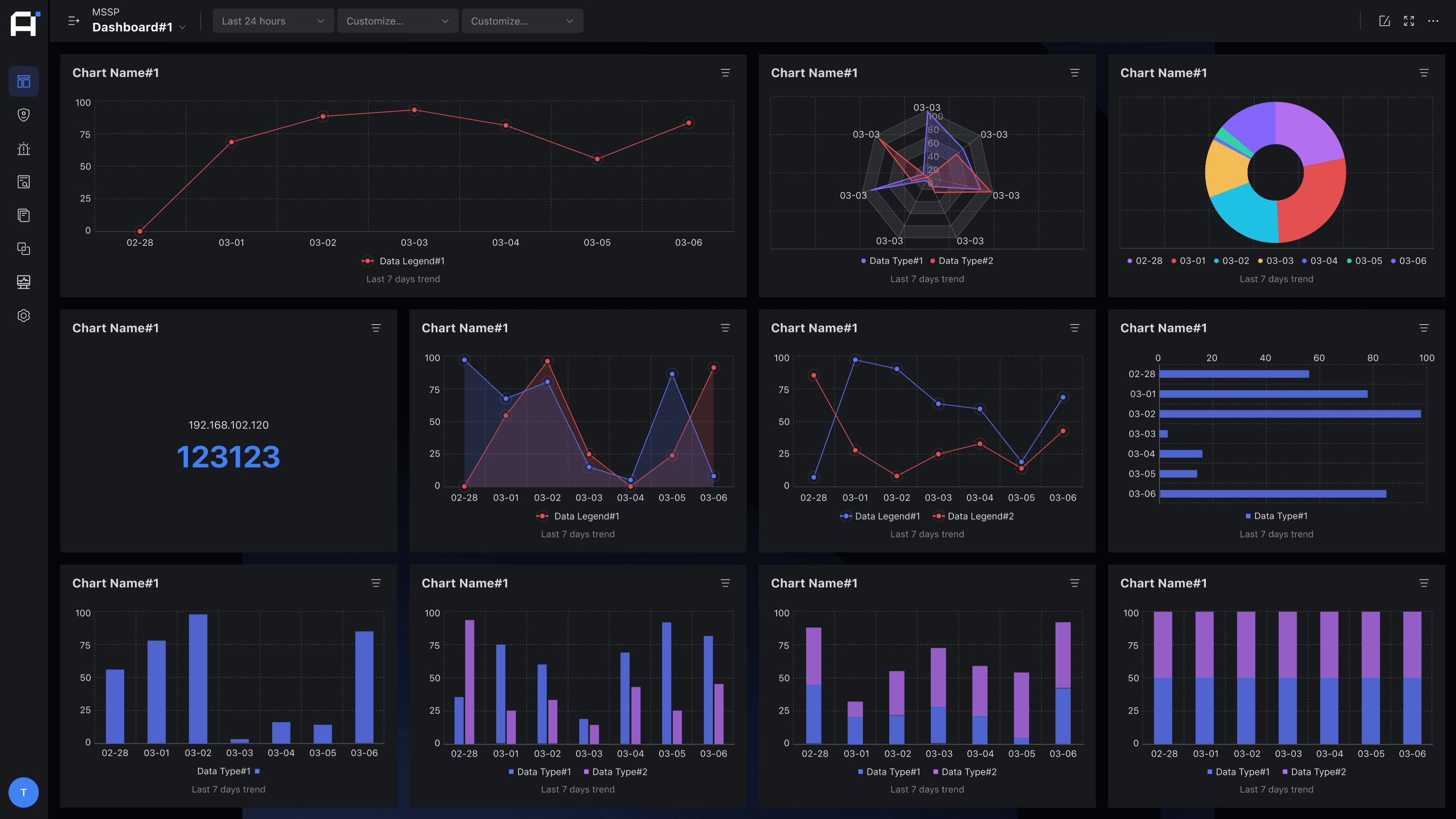
Collect logs, files, API signals, and cloud events into a normalized intelligence layer without exposing unapproved performance claims.
Organizes file, log, API, and cloud-platform inputs into a common operating picture.
Uses parser, location, pattern, and evaluation logic to turn raw telemetry into usable intelligence.
Aligns detection, investigation, and response teams around consistent intelligence semantics.
Source material names Huawei Cloud, Azure, and Kafka as integration directions for bringing platform telemetry into the same pipeline.
The source material highlights a proprietary high-concurrency architecture and UQL hunting layer. Public copy keeps the architecture and workflow detail while withholding unapproved throughput and latency metrics.
Gives analysts a flexible language for deep search logic, investigation pivots, and operational dashboards.
Turns investigation logic into command views that can be adapted for SecOps, hunting, and executive review.
Supports historical investigation patterns without publishing the source file's unapproved performance thresholds.
SIEM combines UQL-driven detection rules with Risk-Based Analysis scoring so fragmented events can be evaluated as a coherent risk picture.
Frames detection outcomes around risk scoring rather than isolated alert volume.
Lets teams express detection logic in the same investigation language used for hunting and review.
Connects related signals into a prioritized operating queue for critical-threat review.